
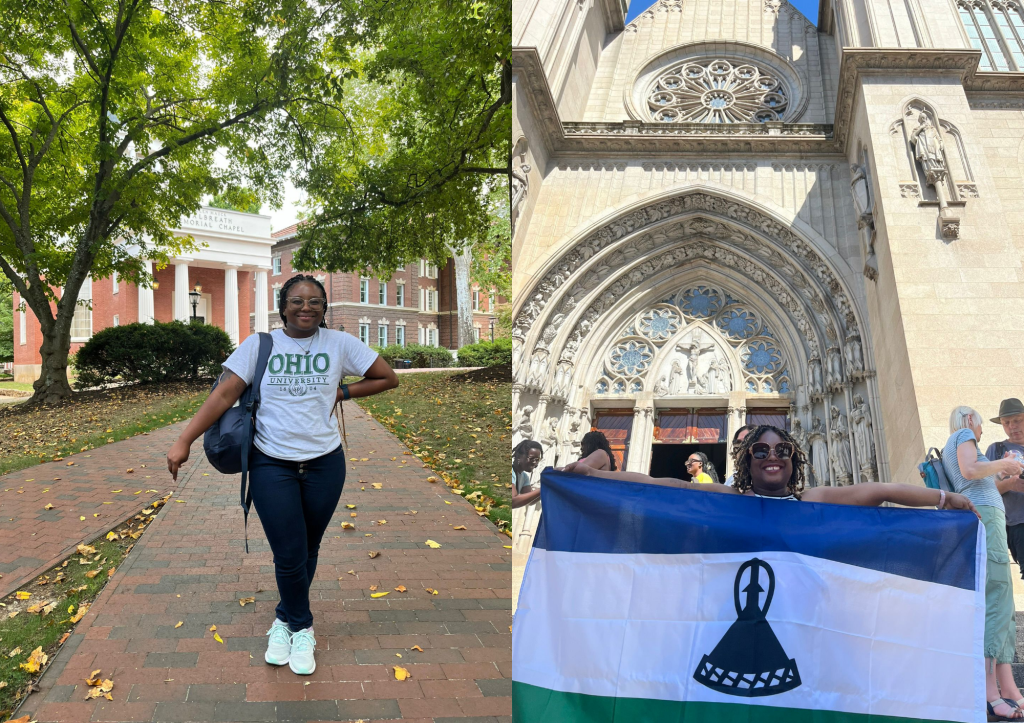
In a small developing country like Lesotho, where internet access is limited, the dream of studying in the United States often feels distant. But for Rose Moremoholo, an accomplished journalist, communications professional, wife, and mother, that dream became a reality. Against all odds, she earned a Fulbright scholarship to pursue her Master’s in Communication and Development Studies, specializing in health communication. This is her story.
First Impressions
Q: What was your first impression of Ohio when you arrived? And how does it compare to what you imagined before leaving Lesotho?
Rose Moremoholo: I imagined Ohio as a big city. I didn’t realize there was both Ohio State University and Ohio University. Ohio State is in Columbus, a big city, while Ohio University is in a small college town. When I first looked for accommodation, I was looking at expensive apartments near Ohio State, but then I realized I should be looking at Ohio University. It was a bit of a disappointment at first because it doesn’t have skyscrapers, but I learned to love the small, welcoming town. It caters to basic needs; for anything more luxurious, you have to travel. We see America through a media lens of tall buildings and traffic, but I found a humble, rural Appalachian town, which, while having high poverty statistics, is very welcoming.
The Challenges of a New Culture
Q: Being far from home can be both exciting and challenging. What has been the most difficult part of adapting to life in the US?
Rose Moremoholo: The most difficult part is understanding American culture and knowing my limits as an outsider without family nearby. Even phone calls aren’t the same as having a family present. Sometimes, I just want to express how overwhelmed I am in my native language. It’s about wanting people to understand my culture and communication style, which is quite different here. So, the most difficult part was coming home to no family and experiencing culture shock, realizing the differences in tolerated behaviors, communication styles, and etiquette. But you learn to navigate it.
Surprises and Cultural Differences
Q: What has surprised you the most about American culture, both positively and negatively?
Rose Moremoholo: My observations are specific to Athens County and the people here, not necessarily a universal view of American culture. Americans here say hi and tell you to have a good day. It’s not just people rushing around. You become friends, but everyone respects personal space. It’s an individualistic culture: you live your life, I live mine. Parents live away from their kids, sometimes for years, without interfering in their lives. This is different from my collectivist culture where we share everything and family is closely intertwined. Here, friendships have clearly defined boundaries; there’s no gray area. This might be why they do better in other aspects of life. However, coming from a collectivist country, you can feel lonely and neglected. If you don’t ask for help, no one will offer it. You need to be clear about your needs. They are forthcoming with their feelings, which is a positive thing. A negative thing is that at some point, you just need to fend for yourself. Back home, we rely on the community.
Staying Connected to Home
Q: How do you stay connected to your roots and maintain a sense of home while living abroad?
Rose Moremoholo: I keep communication channels open with family and friends back home. I watch local productions, not just from Lesotho, but from South Africa and Africa generally, and listen to music. I stay connected through social media and local news. I speak my language and connect with other people from Botswana, Eswatini, and South Africa. We speak our languages together, which helps with nostalgia. I also cook cultural food like steamed bread and pap (maize meal).
Academic and Professional Growth in the US

Q: Academic and professional growth. How does what you are learning about media and communication in the US differ from what you know or practice in Lesotho?
Rose Moremoholo: I’m studying communications and development studies, majoring in health communication, using journalism and media as tools. Here, there are so many academic resources, research materials, textbooks, and practical resources like podcast labs and access to local media outlets. While we have these back home, here they are often freely available through the university. Here you use advanced technologies and find practical experience through internships. The US media and communication landscape is far more advanced.
A Transformative Learning Experience
Q: What has been the most eye-opening or transformative thing you’ve learned so far, either academically or personally?
Rose Moremoholo: Academically, it’s that you can do anything you want here because of the resources and the professors’ willingness to help. They provide platforms to shine and advance. They are highly educated, published PhD holders who specialize in one area. This taught me that I can’t do everything; I need to specialize. My capstone is on metaphors used in health journalism to advance maternal, women, girl, and children’s health. It’s about focusing and becoming an expert. Personally, I’ve learned the importance of confidence. You need to “blow your own trumpet” here to be seen.
The Evolving Role of Journalism

Q: How has this experience reshaped your understanding of the role of journalism and fostering development?
Rose Moremoholo: My understanding of journalism is that we have much more to do than just report. We are archivists of history and informants, but we should ensure that our information translates to change, behavioral, political, economic. We need to define our specialties. Back home, we often become jack-of-all-trades reporters, but that doesn’t foster a sense of pride or expertise. We should be the go-to person for specific issues. Journalism is more than just reporting; it’s about changing lives.
Skills for the Future
Q: What skills or knowledge do you think you’re gaining that will be most useful when you return to Lesotho?
Rose Moremoholo: Research skills. I’m drawn to academia, which means research. I’m gaining skills to be a good professor and educator in health communication. In Lesotho, we often outsource research. Here, I’m learning how to conduct research, which is crucial for effective interventions. Research should be participatory and culturally centered, by the people, for the people. We should learn from communities, because they have valuable knowledge. This ensures sustainability even after external funding ends.
Moments of Pride and Accomplishment
Q: Reflecting on your time so far, can you share a moment when you felt particularly proud and accomplished?
Rose Moremoholo: I felt incredibly proud when my plane landed at JFK. It was surreal… I was in America! I felt I’d accomplished a dream. Academically, I was in a class of accomplished people, and I was part of it. I believe I was the first Mosotho in the Center for International Studies program. I feel like an ambassador for Lesotho. People ask about my long name, and that’s how I share my culture. I also won first prize at the research symposium (at the proposal stage!), which was a huge moment. Receiving awards for a GPA above 3.8 also felt amazing. Despite my imposter syndrome, I felt I was breaking boundaries. It’s not by my power alone; God has a role. Unlike my first degree, where I constantly doubted myself, here I’m just doing it.
Navigating Self-Doubt
Q: Have you faced any moments of self-doubt? Significant challenges during your studies? And how have you worked through them?
Rose Moremoholo: I experience self-doubt and imposter syndrome daily. I feel undeserving. To combat this, I look back at my achievements… I have a list, a mini-CV, to remind myself of the things I’ve achieved.. I tend to forget and doubt myself. I feel unworthy about starting projects, assignments, and presentations. I question myself even when contesting for positions. But something always proves me wrong. I constantly remind myself of my achievements to bury the doubt. If I fear I won’t make it, I look at the list and think, “You’ve made it this far.” Even if I don’t achieve everything, at least I tried. It’s not the end of the world if I don’t perform as well as I hoped; I did it anyway.
Balancing Roles and Representation
Q: How do you navigate the balance between being a student and a representation of yourself in an international setting?
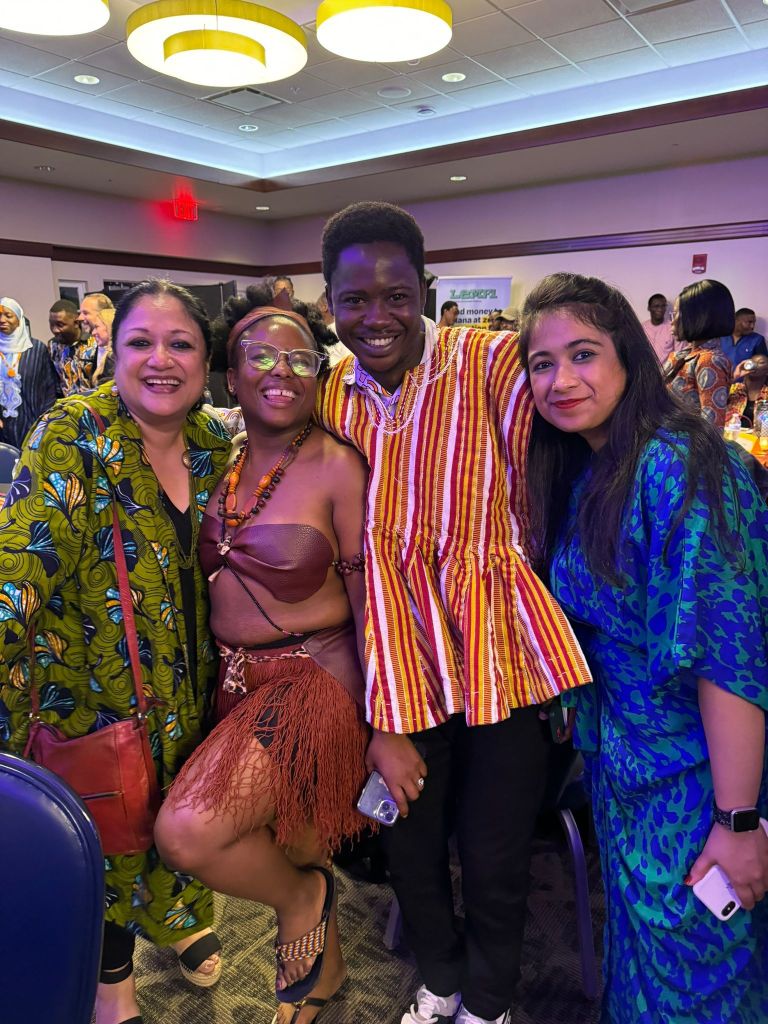
Rose Moremoholo: I tell myself I’m just a fraction of what Lesotho offers. I’m a student, and I don’t want people to assume I represent the entire country. I represent Lesotho, but there’s much more to it. It’s a platform for me to change mindsets. If I can inspire even one or two people to visit Lesotho or see it in a new light, that’s enough. I focus on the positives, on what the country offers; peace, scenery, good destinations. I want to share what people don’t already know from negative media portrayals. As a student, my research and presentations often focus on Lesotho. I want people to know we’re an independent country, not part of South Africa. I’m also active in the African Student Union (as treasurer) and the Fulbright Students Association (as secretary), and I participate in cultural exchange activities.
Challenges as a Woman, Wife, and Mother
Q: As a woman, a wife, a mother, what unique challenges have you faced during this journey and how have you managed them?
Rose Moremoholo: Being a woman, my life is tied to other responsibilities, like being a wife and mother. Many questioned my decision to leave my husband for two years, but I believe it empowers me to be a better wife and mother. It’s a sacrifice we all make. I sacrifice being with them, and they sacrifice being with me. It’s challenging seeing my son grow up without me and seeing my husband take on both parental roles. It’s painful missing milestones like birthdays. These are sacrifices for a better future. I pray my son understands why I left. We communicate every day through calls and video chats, despite the time difference. I also send gifts home to maintain connection.
Impact and Future Aspirations
Q: Impact and future aspirations. What do you hope to bring back to Lesotho from this experience both personally and professionally?
Rose Moremoholo: Personally, I want skills for a good job and financial security. Professionally, I want to contribute to academia, perhaps as a professor, through research and practical skills for communication students. I want to impart knowledge and transform the field. I also hope to foster collaboration between academics, professionals, and the community to find solutions to our challenges, especially in the health sector. I want to build networks and work with agencies and professionals to find the right resources. I can’t do it alone; I need others with the same vision.
Advice for Aspiring Journalists
Q: If you were to advise a young journalist in Lesotho dreaming of studying abroad, what would you tell them about preparations and mindset?
Rose Moremoholo: Anything is possible with 100% effort. Make your dreams known. If it’s journalism, work hard, find unique stories, and build international connections. I know journalism isn’t highly valued or well-paid in our country, but we need dedicated professionals with a mission. Your stories should improve lives, including your own. Find meaning in your work, but don’t get exhausted. Dream big, you can study abroad. Be prepared to write, academic, professional, and personal statements. This is the most challenging part of applying for graduate scholarships. Be focused, assertive, and sure of what you want.
Long-Term Impact on Lesotho’s Media Landscape
Q: What long-term impact do you hope to make in Lesotho’s media landscape after completing your studies?
Rose Moremoholo: My long-term impact is to establish health journalism and health communication/risk communication courses and professional training. Our current health communication is lacking. We need to focus on prevention through consistent communication, like marketing health and healthy behaviors. We need specialized health reporters because the field is dense with terminology and misinformation that can impact national health strategies. I also dream of a national communication association or research body to conduct research and provide a platform for independent researchers. Ultimately, I want to see the media landscape in our country change for the better.
A Final Word
Rose Moremoholo’s journey is a testament to the power of perseverance, the importance of representation, and the transformative potential of education. Her experiences and aspirations offer valuable insights for aspiring journalists and anyone pursuing their dreams against the odds.

 Lesotho Between Headlines
Leave a comment